In today’s fast-paced world, many people focus on achieving success, earning more money, and meeting daily responsibilities. However, true wealth lies in good health. Living a long and happy life is not about following strict diets or spending hours in the gym. Instead, it comes from practicing simple, healthy habits consistently. Small changes in daily routines can significantly improve physical health, mental well-being, and overall quality of life.
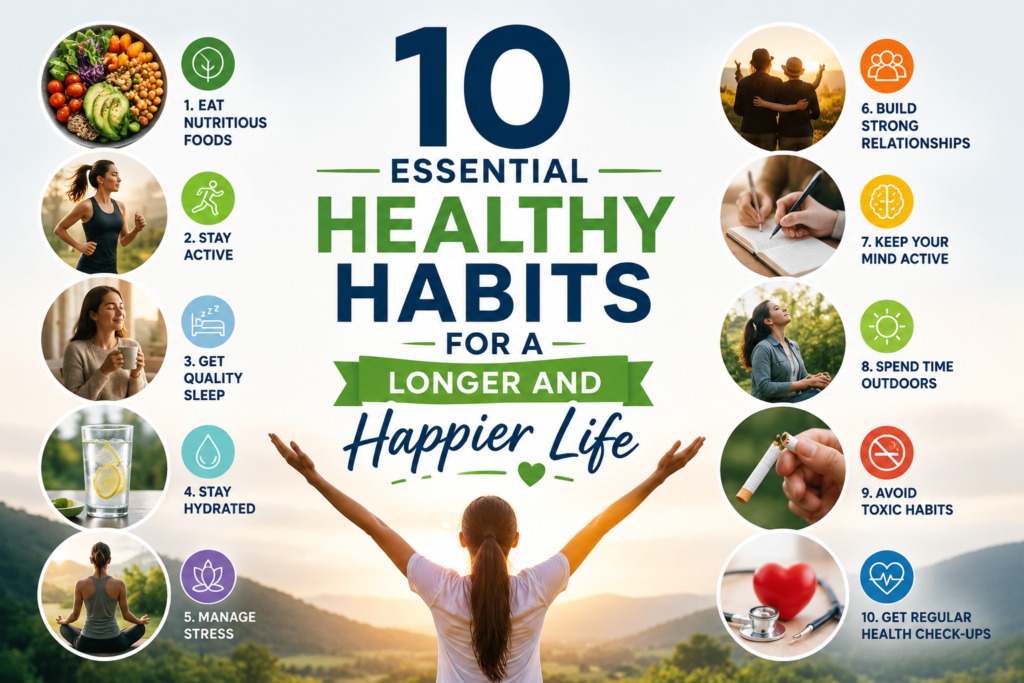
Here are ten essential healthy habits that can help you live longer, feel better, and enjoy life to the fullest.
1. Eat a Balanced and Nutritious Diet
The food you consume plays a vital role in your overall health. A balanced diet provides the body with the nutrients it needs to function properly. Include plenty of fruits, vegetables, whole grains, lean proteins, and healthy fats in your meals.
Try to limit processed foods, sugary drinks, and excessive amounts of salt and unhealthy fats. Making healthier food choices can reduce the risk of heart disease, diabetes, obesity, and other chronic illnesses.
2. Stay Physically Active
Regular physical activity keeps the body strong and energetic. Exercise improves cardiovascular health, strengthens muscles and bones, and helps maintain a healthy weight. It also boosts mood and reduces stress.
You do not need an intense workout routine to stay fit. Activities such as walking, cycling, swimming, dancing, or even gardening can provide significant health benefits. Aim for at least 30 minutes of moderate exercise most days of the week.
3. Get Enough Sleep
Quality sleep is essential for both physical and mental health. During sleep, the body repairs itself, strengthens the immune system, and restores energy levels.
Adults should aim for seven to nine hours of sleep each night. Establishing a regular sleep schedule, avoiding screens before bedtime, and creating a comfortable sleeping environment can improve sleep quality.
4. Drink Plenty of Water
Water is essential for nearly every function in the body. It helps regulate temperature, transport nutrients, aid digestion, and remove waste.
Dehydration can lead to fatigue, headaches, and reduced concentration. Make it a habit to drink enough water throughout the day, especially during hot weather or after physical activity.
5. Manage Stress Effectively
Stress is a natural part of life, but chronic stress can negatively affect health. It can contribute to anxiety, depression, high blood pressure, and weakened immunity.
Healthy stress-management techniques include meditation, deep breathing exercises, spending time in nature, reading, listening to music, or engaging in hobbies. Taking time to relax can improve both mental and physical well-being.
6. Maintain Strong Social Connections
Humans are social beings, and meaningful relationships contribute to happiness and longevity. Spending time with family, friends, and supportive communities can reduce feelings of loneliness and improve emotional health.
Make an effort to nurture relationships through regular communication, shared activities, and genuine support. Strong social bonds can help people cope with life’s challenges more effectively.
7. Avoid Harmful Habits
Smoking, excessive alcohol consumption, and substance abuse can have serious long-term effects on health. These habits increase the risk of various diseases, including cancer, heart disease, and liver damage.
Replacing harmful habits with healthier alternatives can significantly improve life expectancy and overall quality of life.
8. Take Care of Your Mental Health
Mental health is just as important as physical health. Paying attention to your emotional well-being can help you maintain a positive outlook and better handle stress.
Practice self-care, seek help when needed, and do not hesitate to talk to a trusted friend, family member, or professional if you are struggling. A healthy mind contributes to a healthier and happier life.
9. Schedule Regular Health Checkups
Preventive healthcare helps identify potential health problems before they become serious. Regular medical checkups, screenings, and vaccinations can play a crucial role in maintaining long-term health.
Being proactive about your health allows you to make informed decisions and address concerns early.
10. Practice Gratitude and Positive Thinking
A positive mindset can have a powerful impact on overall well-being. People who focus on gratitude and optimism often experience lower stress levels and greater life satisfaction.
Taking a few moments each day to appreciate the good things in life can improve happiness and emotional resilience. Keeping a gratitude journal or reflecting on positive experiences can help cultivate this habit.
Conclusion
Living a longer and happier life does not require drastic changes. By adopting healthy habits such as eating nutritious foods, staying active, getting enough sleep, managing stress, and maintaining strong relationships, you can greatly improve your overall well-being. The key is consistency. Small, positive actions performed daily can lead to lasting health benefits and a more fulfilling life.
Start with one habit today, and over time, these simple choices can transform your health, happiness, and future.
