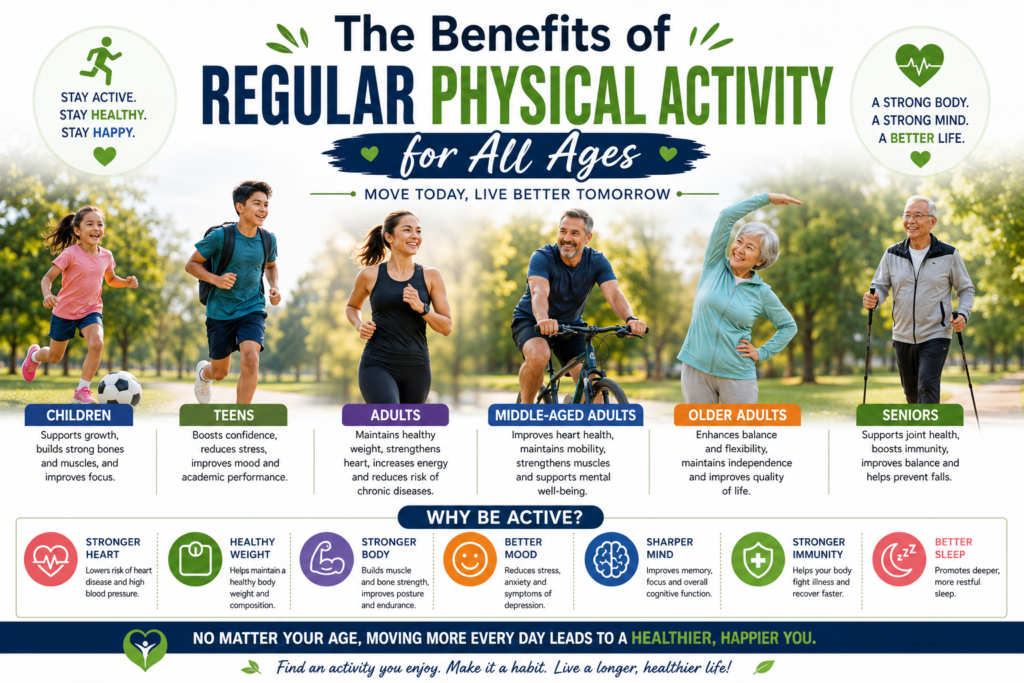
Physical activity is one of the most effective ways to maintain good health and improve overall quality of life. Regardless of age, staying active offers numerous physical, mental, and emotional benefits. From young children developing strong bones and muscles to older adults maintaining mobility and independence, regular exercise plays a vital role in promoting lifelong health and well-being.
In an increasingly sedentary world, making time for physical activity has become more important than ever. Fortunately, exercise does not have to involve intense workouts or expensive gym memberships. Simple activities such as walking, cycling, swimming, dancing, or playing sports can provide significant health benefits for people of all ages.
Why Physical Activity Matters
Physical activity refers to any movement that requires energy expenditure. It helps the body function efficiently by strengthening muscles, improving cardiovascular health, and supporting overall physical fitness.
Regular exercise not only helps prevent various health conditions but also contributes to better mental health, increased energy levels, and improved daily functioning. Incorporating movement into everyday life can lead to long-term health benefits that extend well beyond physical appearance.
Benefits for Children and Teenagers
Physical activity is essential during childhood and adolescence, as it supports healthy growth and development.
Supports Healthy Growth
Regular exercise helps build strong bones, muscles, and joints. Activities such as running, jumping, and sports encourage proper physical development and improve coordination and balance.
Promotes Healthy Weight Management
Active children are more likely to maintain a healthy weight and reduce their risk of childhood obesity. Physical activity helps burn calories while encouraging healthy habits that can continue into adulthood.
Improves Academic Performance
Research has shown that regular exercise can enhance concentration, memory, and cognitive function. Active children often perform better academically and demonstrate improved problem-solving skills.
Encourages Social Development
Participating in team sports and recreational activities helps children develop communication skills, teamwork, discipline, and self-confidence.
Benefits for Adults
For adults, regular physical activity is a key component of a healthy lifestyle.
Improves Heart Health
Exercise strengthens the heart and improves circulation. It can help lower blood pressure, reduce cholesterol levels, and decrease the risk of heart disease and stroke.
Helps Prevent Chronic Diseases
Regular physical activity reduces the risk of several chronic conditions, including type 2 diabetes, obesity, and certain types of cancer. It also helps manage existing health conditions more effectively.
Supports Mental Well-Being
Exercise stimulates the release of endorphins, which are natural chemicals that improve mood and reduce stress. Regular physical activity can help decrease symptoms of anxiety and depression while promoting emotional resilience.
Increases Energy Levels
Many people find that staying active improves stamina and reduces feelings of fatigue. Better circulation and stronger muscles contribute to greater energy throughout the day.
Benefits for Older Adults
As people age, physical activity becomes increasingly important for maintaining independence and quality of life.
Preserves Mobility and Flexibility
Regular movement helps maintain joint flexibility, muscle strength, and balance. These benefits reduce the risk of falls and make everyday activities easier to perform.
Supports Bone Health
Weight-bearing exercises such as walking and strength training help maintain bone density and reduce the risk of osteoporosis and fractures.
Enhances Cognitive Function
Physical activity may help protect brain health and reduce the risk of cognitive decline. Active older adults often experience better memory, concentration, and mental sharpness.
Encourages Independence
Maintaining physical fitness enables older adults to continue performing daily tasks independently, contributing to greater confidence and self-sufficiency.
Mental and Emotional Benefits at Every Age
The positive effects of physical activity extend beyond physical health. People of all ages can experience significant mental and emotional benefits through regular exercise.
Reduces Stress
Physical activity helps the body manage stress more effectively by lowering stress hormone levels and promoting relaxation.
Improves Sleep Quality
Individuals who engage in regular exercise often enjoy deeper and more restful sleep, which supports overall health and recovery.
Boosts Self-Confidence
Achieving fitness goals, improving physical abilities, and maintaining an active lifestyle can enhance self-esteem and confidence.
Promotes a Positive Outlook
Exercise encourages the release of mood-enhancing chemicals that help people feel happier, more motivated, and better equipped to handle daily challenges.
Simple Ways to Stay Active
Incorporating physical activity into daily life does not have to be complicated. Here are a few practical ways to stay active:
- Take a brisk walk during breaks or after meals.
- Use stairs instead of elevators whenever possible.
- Participate in sports or recreational activities.
- Ride a bicycle for short trips.
- Practice stretching or yoga at home.
- Engage in outdoor activities with family and friends.
- Schedule regular exercise sessions and treat them as important appointments.
The key is finding activities that are enjoyable and sustainable over the long term.
Conclusion
Regular physical activity is one of the most powerful tools for improving health and enhancing quality of life. From supporting healthy growth in children to preserving mobility and independence in older adults, exercise offers benefits that extend across every stage of life.
By making physical activity a regular part of daily routines, individuals can strengthen their bodies, improve mental well-being, reduce the risk of disease, and enjoy a more active and fulfilling life. No matter your age, it is never too early—or too late—to start moving toward better health.
